Behind many of the free health programmes in South Snohomish County, Washington, sits an organisation most residents have never heard of: the Verdant Health Commission. It does not run a hospital day to day, and it does not see patients itself. Instead, it owns the hospital campus, leases it to a hospital operator, and invests the lease income in community health — funding nonprofits, running a wellness centre, and backing programmes for people who would otherwise go without care. This guide explains what Verdant is, how it works, and what it offers the community it serves.
What the Verdant Health Commission Is
The Verdant Health Commission is Public Hospital District No. 2, Snohomish County — a public agency created by the community in 1962 to bring a hospital to South Snohomish County. It built and operated what was then Stevens Hospital until 2010, when it entered a long-term lease agreement with Swedish, which now operates the Edmonds hospital campus as part of Providence Swedish. Verdant remains the owner of the campus, and it is governed by a board of five elected commissioners.
That structure is the key to understanding Verdant. It is not a hospital operator and it is not a charity: it is a public district whose job is to make sure the residents of South Snohomish County have access to quality healthcare. It does that by managing its assets — the hospital campus and other buildings — and by directing the income from those assets into community health.
Verdant’s service area covers roughly 190,000 residents in the cities of Brier, Edmonds, Lynnwood, Mountlake Terrace and Woodway, plus portions of Bothell and unincorporated Snohomish County. Since 2011 it has invested more than $95 million in the community, funding nonprofits that provide free or low-cost access to health programmes and services. For the details behind these figures, see Verdant’s own About Us page.
How the Money Reaches the Community
Verdant’s elected Board of Commissioners allocates lease revenue as community investments to nonprofits that offer direct healthcare services to residents of South Snohomish County. The funding supports a wide range of work: access to direct healthcare, food security, and mental health support for vulnerable populations, among other priorities. In one recent round, Verdant awarded funding to 31 community organisations across the district, split between improving access to direct healthcare services and addressing the child, adolescent and young adult mental health crisis.
That focus on youth mental health is one of Verdant’s current priorities, alongside access to care. The commission has said it plans to finalise a strategic framework by the end of 2026, with implementation beginning in 2027 — so the shape of its funding will keep evolving, and the best source for current priorities is Verdant’s own website.
The Verdant Community Wellness Center
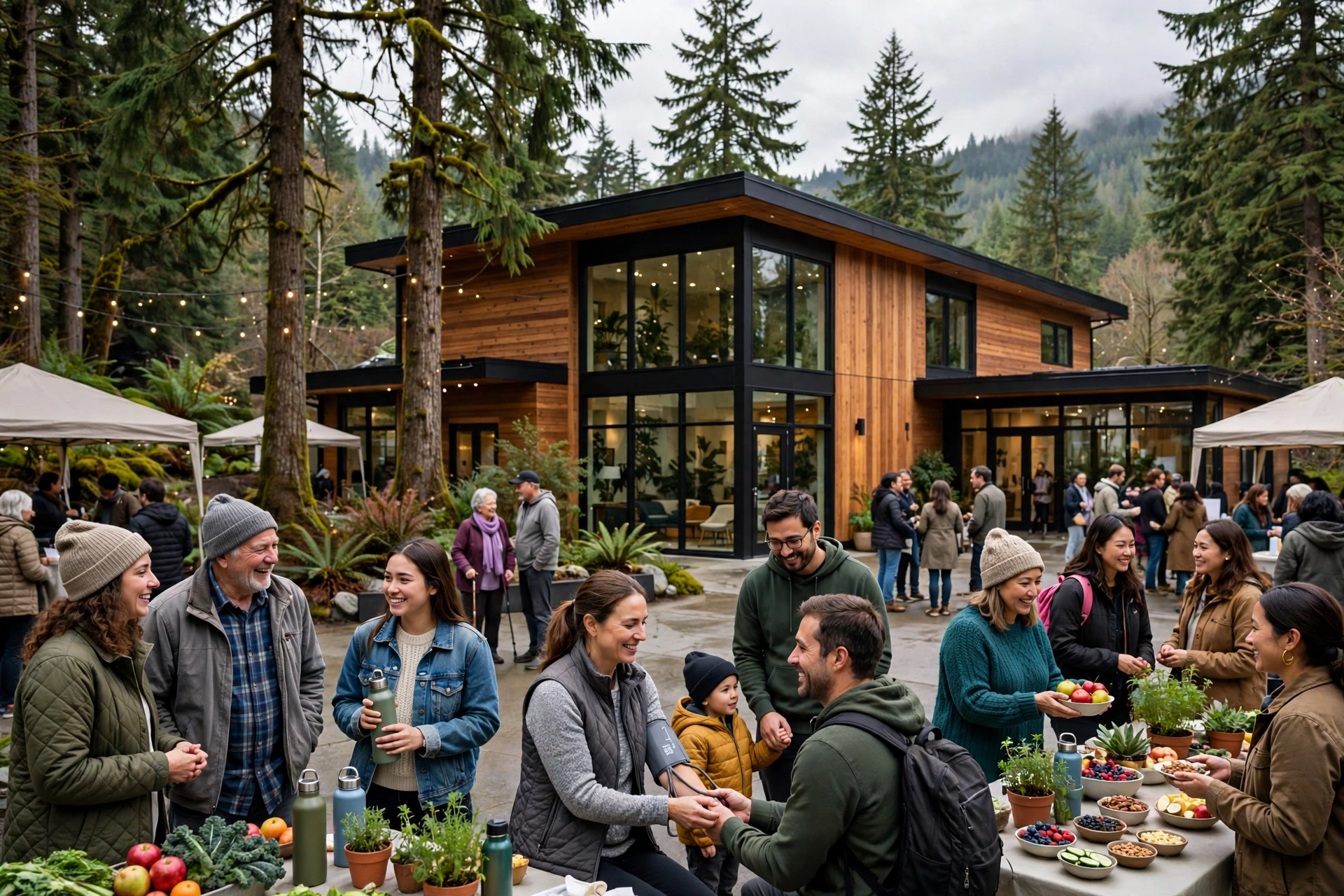
Verdant also runs the Verdant Community Wellness Center in Lynnwood, where free programmes and resources are offered to the community. Wellness centres like this are where the commission’s work is most visible to ordinary residents: classes, screenings and support programmes that are free at the point of use, aimed at prevention and everyday wellbeing rather than treatment after the fact.
If you live in the district, the Wellness Center is the most direct way to benefit from Verdant’s work. Check its current programme schedule on Verdant’s website before you go, since classes and services change, and some programmes may need registration. For a sense of how public health services work in another community, see our guide to the Fredericksburg Health Department, and for a local provider’s approach to patient care, our guide to Trinity Health Hudsonville covers the questions worth asking before you register.
Sustainability and the Bigger Picture
Verdant also takes an interest in the environmental side of health. Healthcare buildings use a great deal of energy and produce a great deal of waste, and the commission has worked on making its own properties more sustainable — including seeking grants to clean up a former retail site it owns in Edmonds for redevelopment as a fire station. The connection is practical rather than abstract: cleaner air, safer buildings and healthier neighbourhoods are all part of the same picture as clinics and programmes.
That said, Verdant’s core work remains funding and programmes, not technology. Claims that it runs AI diagnostics or robotic surgery are not supported by its own publications, and this guide makes no such claims — what Verdant demonstrably does is invest public money in community health, year after year, in one corner of Washington State.
How Residents Can Use Verdant’s Work
If you live in South Snohomish County, there are practical ways to benefit. Look at the Wellness Center’s programme schedule and use the free classes and screenings. If you run or volunteer for a local nonprofit that provides health services, look at Verdant’s funding rounds and whether your organisation could apply. And if you care about how the money is spent, the Board of Commissioners is elected — its meetings are public, and residents can attend and ask questions.
If you do not live in the district, Verdant is still a useful model to know about. Public hospital districts exist in several states, and they work on the same principle: a community owns its hospital assets, leases them to an operator, and uses the income to fund local health. If your area has one, it may be funding services you use without knowing it.
FAQ
What is the Verdant Health Commission?
Public Hospital District No. 2, Snohomish County, Washington — a public agency that owns the Edmonds hospital campus, leases it to Providence Swedish, and invests the lease income in community health programmes.
Who does Verdant serve?
About 190,000 residents of South Snohomish County, including Brier, Edmonds, Lynnwood, Mountlake Terrace, Woodway, and parts of Bothell and unincorporated Snohomish County.
Does Verdant run a hospital?
No. It owned and operated Stevens Hospital until 2010, then leased the campus to Swedish. It now focuses on funding community health services and running the Verdant Community Wellness Center in Lynnwood.
Final Thoughts
The Verdant Health Commission is a quiet kind of public institution: no hospital of its own, no patients of its own, but a steady flow of public money into the health of one community. If you live in South Snohomish County, its Wellness Center and the nonprofits it funds are there for you — and its elected board is there to be held to account. That is what a public hospital district is for, and Verdant is a clear example of it working as intended.