
You step out of the museum, hungry and a little footsore, and the first restaurant you see has a glossy photo menu, a host calling you inside, and prices that make you blink. You sit down anyway, because you are tired and it is right there — and an hour later, you have paid far too much for a meal you will barely remember. There is a better way, and it rarely means walking far or eating badly.
The trick is not a secret app or a single magic street. It is a small shift in habit: walk a little further, look for the signs locals trust, and decide what you want before hunger decides for you.
Why Food Costs More Right by the Landmark
Restaurants closest to a famous sight pay the highest rents, and they know most of their customers will only visit once. That pushes prices up and, too often, effort down: there is little reason to win a repeat visit from someone leaving town tomorrow. Menus here tend to lean on pictures, long translated lists, and a premium for the view rather than the cooking.
Walk Ten Minutes in Any Direction
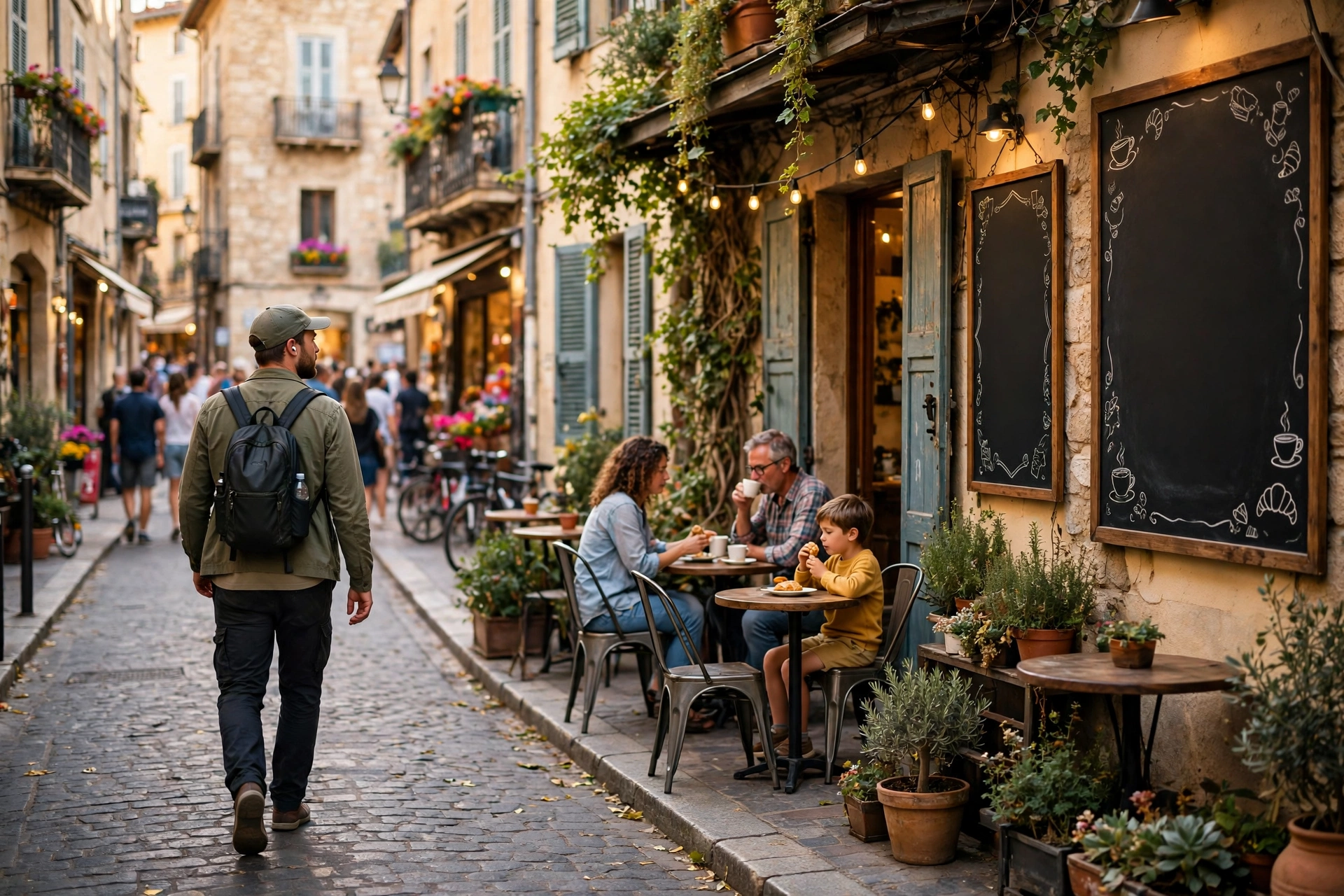
The single most reliable rule is also the simplest. Leave the main square, the museum steps, or the station exit, and walk for about ten minutes — one or two streets away from the crowds, or around a corner where tour groups do not go. Prices often drop noticeably, menus get shorter, and the food gets more specific to the place you are actually in.
Pick a direction that looks lived-in: a street with a pharmacy, a school, a small grocery shop, or people carrying shopping bags rather than cameras. Walking parallel to the main tourist street keeps you close enough to return to the sights afterwards, and gives you time to compare a few menus instead of settling for the first one.
Read the Menu Before You Sit Down
A menu tells you a great deal before you order anything. Look for these practical signs, and treat them as a checklist rather than a guarantee:
- A short, focused menu. A restaurant that does a dozen dishes well is usually a better bet than one offering a hundred dishes from five cuisines.
- Clear prices, including drinks, taxes, and any service charge. If prices are vague or a charge only appears in small print, ask before ordering — or walk on.
- A daily special or lunch set. A set lunch or fixed-price menu is often the best value, and usually reflects what the kitchen is cooking fresh that day.
- Local dishes, not just familiar ones. The house special, or the meal most tables around you are eating, deserves more attention than the generic international section.
- People eating, not just posing. A room full of people actually eating at lunch is a stronger signal than a busy terrace of people drinking one coffee.
Be wary of menus handed to you on the street, aggressive invitations to sit down, and prices quoted verbally rather than printed. Tourist areas also attract small overcharging tricks, so read how to avoid tourist scams in a new city before you travel, especially the parts about checking bills and agreeing prices in advance.
Follow the Lunch Crowd, Not the Guidebook Crowd
The cheapest good meals are usually eaten by people who work nearby. Office workers, shop staff, and students need lunch every day, so the places they choose have to be affordable, quick, and good enough to return to tomorrow. If you see a midday queue of people who clearly live in the city, join it.
Markets are another reliable option: a food hall or a row of stalls lets you see the food before you buy it and try more than one thing for the price of a single restaurant main course. Bakeries serve the same purpose in many cities — bread, a savoury pastry, cheese, or fruit can make a filling, genuinely local lunch for very little money.
Take a practical approach to street food. Choose stalls with a steady stream of customers, food cooked in front of you and served hot, and a short menu that turns over quickly. If a stall looks quiet or the food has been sitting out, choose another one.
Use Your Phone Wisely — and Sparingly
Maps and review apps can help, if you use them with judgement. Search in the language of the place when you can, using simple terms such as “lunch set” or the name of a dish you want to try, rather than only searching in English. Reviews that mention specific dishes and prices are more useful than a star rating alone.
Use reviews with judgement: the top-rated places nearest a landmark are often popular precisely because tourists rate them, which can push you back into the expensive ring you were trying to leave. Read a handful of recent, detailed reviews that mention specific dishes and prices, and check whether the photos match the menu.
Before you leave your hotel, save a few options offline: two places near the sights you plan to visit, and one fallback near your accommodation. That way, when hunger hits, you are choosing from a shortlist you made calmly, not from the nearest doorway in a rush.
Set a Simple Food Budget for the Day
Decide roughly how much you are comfortable spending on food for the day. Many travellers find that a modest breakfast, a proper but inexpensive lunch, and a lighter evening meal stretches the budget further than three restaurant meals.
Lunch is usually where the savings are: many restaurants offer their best value at midday, when they serve workers and regulars, while evening menus near attractions are priced for visitors. If you want one memorable meal in a city, make it lunch and keep dinner simple. For a broader look at keeping travel affordable, see these ideas for financing a vacation without breaking the bank.
Handle Dietary Needs Without Paying a Premium
If you are vegetarian, vegan, gluten-free, or managing an allergy, a little preparation saves money and stress. Learn the local words for what you cannot eat and save them on your phone — a short written note in the local language is often clearer than explaining in a noisy restaurant. Markets, bakeries, and grocery shops also make it easier to build a meal from ingredients you recognise.
When you eat out, state what you need plainly and early, and ask what is in a dish before ordering. If a place cannot answer confidently, choose somewhere that can.
A Simple Routine That Works in Any City
Put the pieces together: eat breakfast near your accommodation, note one or two lunch options a short walk from the sights, walk past the first row of restaurants at lunchtime and sit where locals are eating, and keep dinner light — a market snack or a simple meal near where you are staying.
Frequently Asked Questions
Is it safe to eat street food near tourist attractions?
It can be: choose busy stalls, food cooked fresh and served hot, and places where turnover is fast. If you are unsure about water and hygiene, stick to cooked food and bottled drinks, and skip anything that has been sitting out.
How far should I walk to find cheaper food?
About ten minutes, or one or two streets away from the main crowd, is usually enough. You do not need to leave the area entirely — just step outside the ring of restaurants that depend only on passing visitors.
Should I avoid all restaurants near attractions?
No. Some are genuinely good, especially historic cafes or places with a real local following. Judge each one by its menu, its customers, and its prices, rather than by location alone.
What if I only have time for one meal out?
Make it lunch. Midday menus are often better value, the food is fresher, and you will still have the evening free for a walk, a market visit, or a simple snack without the pressure of finding a restaurant when you are tired.
Final Thoughts
Finding cheap eats near tourist attractions comes down to three habits: walk a little further, read the menu before you sit down, and eat where the city itself eats. Do those three things and you will usually eat better and spend less.