
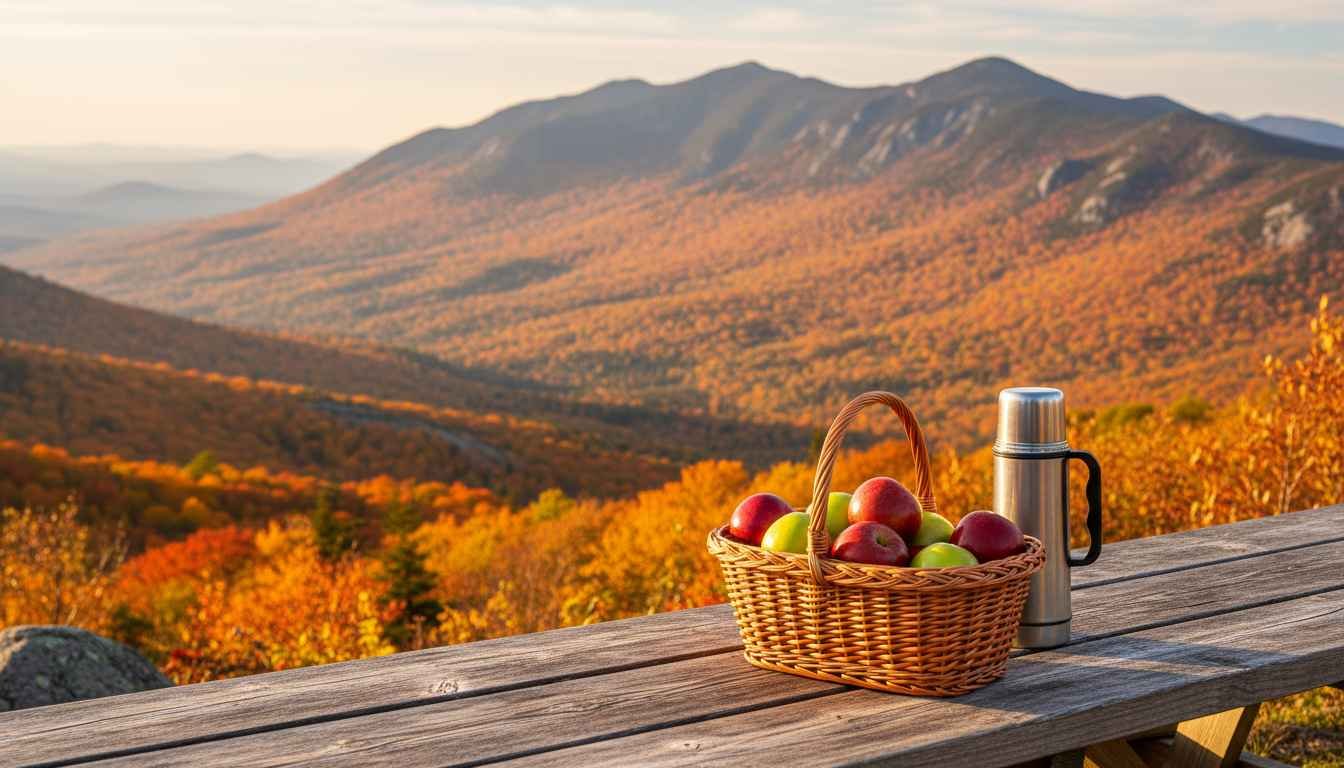
You are driving the Kancamagus Highway in October, the maples on both sides of the road burning red and gold, and every overlook has someone pulled over with a camera. Or it is January, and you are riding the Cog Railway up Mount Washington through a whiteout. Either way, you are in the White Mountains — New Hampshire’s high country, where the tallest peak in the Northeast, the oldest scenic railroad in the world, and a string of storybook towns sit within an hour of each other. Here are the best places to visit near White Mountains NH, and how to plan around them.
Mount Washington: The Tallest Peak in the Northeast
Mount Washington, at 6,288 feet, is the highest peak in the northeastern United States — and famous for some of the worst weather on Earth, with a recorded wind gust of 231 mph. On a clear day, the summit offers views across New Hampshire, Maine, Vermont, Massachusetts, and into Canada. You do not have to hike it: the Mount Washington Cog Railway, running since 1869, climbs to the summit in about an hour, and the Auto Road lets you drive yourself up (with a guided tour option for nervous drivers). The summit buildings, including the weather observatory museum, are open in summer; winter visits are by railway only, in specially equipped snow coaches.
Franconia Notch State Park: Gorges, Flumes, and Cannon Mountain
Franconia Notch is the White Mountains’ most concentrated dose of scenery. The Flume Gorge is a two-mile boardwalk loop through a narrow granite gorge with waterfalls and covered bridges — go early, as it is the park’s most popular walk. Across the notch, the Cannon Mountain Aerial Tramway lifts you to a 4,080-foot summit with views of the notch and, on clear days, the peaks of Vermont and Canada. In winter, Cannon is one of New England’s best ski areas, with the state’s longest vertical drop. The park also holds Echo Lake, a calm swimming beach in summer, and the Old Man of the Mountain historic site, where the famous rock profile once stood.
The Kancamagus Highway: New England’s Greatest Scenic Drive
The Kancamagus Highway — the “Kanc” — runs 34.5 miles from Lincoln to Conway along the Swift River, with no gas stations, no restaurants, and no commercial development for most of its length. That is the point. Overlooks, waterfalls, and trailheads line the route: Sabbaday Falls is a short, easy walk to a three-tiered waterfall; Rocky Gorge is a roadside stop with a footbridge over a scenic pool; and the Albany Covered Bridge, just off the eastern end, is one of the most photographed spots in the state. In fall, the Kanc is the heart of New England foliage season — drive it on a weekday if you can, and expect slow traffic at every overlook on October weekends.
North Conway: The Classic White Mountains Town
North Conway is the region’s main base town, with a Victorian-era main street of shops, restaurants, and inns. It works as a base because everything is close: the Conway Scenic Railroad runs vintage trains through the valley, including a trip to Crawford Notch; the town’s outlet shops draw bargain hunters; and trailheads for Mount Washington, the Moat Mountains, and the Saco River are all within a short drive. In winter, the town serves the ski areas at Cranmore, Attitash, and Wildcat. Stay here if you want restaurants and services within walking distance of your lodging.
Littleton and the Western Notches
Littleton, on the Connecticut River at the western edge of the region, is a smaller, quieter alternative to North Conway. Its main street — named one of the best in America — holds bookshops, cafés, and the Pollyanna statue, a nod to the town’s most famous literary export. From Littleton, the western notches are close: Crawford Notch State Park, with its waterfalls and the historic Mount Washington Hotel at Bretton Woods, and the Zealand Valley, one of the quietest hiking areas in the Whites.
Outdoor Activities Through the Seasons
Hiking is the White Mountains’ main draw, with trails from easy valley walks to the Appalachian Trail’s most challenging miles — the Presidential Range traverse is a serious undertaking that should not be attempted without preparation and a weather check. In winter, the region’s ski areas include Loon Mountain, Cannon Mountain, and Bretton Woods, plus cross-country skiing at the Jackson Ski Touring Foundation. Spring brings waterfalls at their fullest, and summer brings swimming holes, river kayaking on the Saco, and moose-watching at dusk along Route 3 in the north. Fall foliage typically peaks in late September to mid-October, moving from the high elevations down.
Planning Your White Mountains Trip
Base yourself in North Conway, Lincoln, or Littleton, and give the region at least three days: one for Franconia Notch, one for Mount Washington and the Kancamagus, and one for a town day and a hike. Book lodging early for October foliage and for winter weekends — the region’s inns fill up months ahead. For more New England travel ideas, see our guide to the best places to visit in Boston in fall, and for another scenic region nearby, our roundup of scenic places to visit in New York.
Mountain weather changes fast: pack layers and rain gear even in summer, carry water and a map on any hike, and check the Mount Washington Observatory forecast before heading above treeline. Cell service is unreliable in the notches, so download offline maps before you go.
FAQ
When is the best time to visit the White Mountains?
Late September to mid-October for fall foliage, July and August for hiking, and January to March for skiing. Each season has a distinct character, and winter driving requires care.
How many days do you need near the White Mountains?
Three days cover Franconia Notch, Mount Washington, and the Kancamagus Highway. Add a day or two for longer hikes or a relaxed town stay.
Are the White Mountains suitable for families?
Yes. The Cog Railway, the Flume Gorge, the tramway at Cannon Mountain, and the Conway Scenic Railroad are all family-friendly, and many valley trails are easy walks.
Final Thoughts
The White Mountains reward the traveler who mixes the icons with the in-between moments: a covered bridge at dusk, a waterfall you found by accident, a town main street that still feels like 1950. Pick a base, plan one big outing a day, and leave room for the road itself — in the Whites, the drive is half the destination.