
You land in Lima at dusk, the Pacific fog rolling in over the cliffs of Miraflores, and the first thing you notice is the smell of grilled anticuchos drifting from a street cart. Lima is not a city you pass through on the way to Machu Picchu — it is a destination in its own right, a coastal capital where pre-Inca pyramids sit beside colonial cathedrals and some of the best restaurants in the world. These are the top places to visit in Lima Peru, and how to fit them into a real trip.
The Historic Centre: Lima’s Colonial Heart
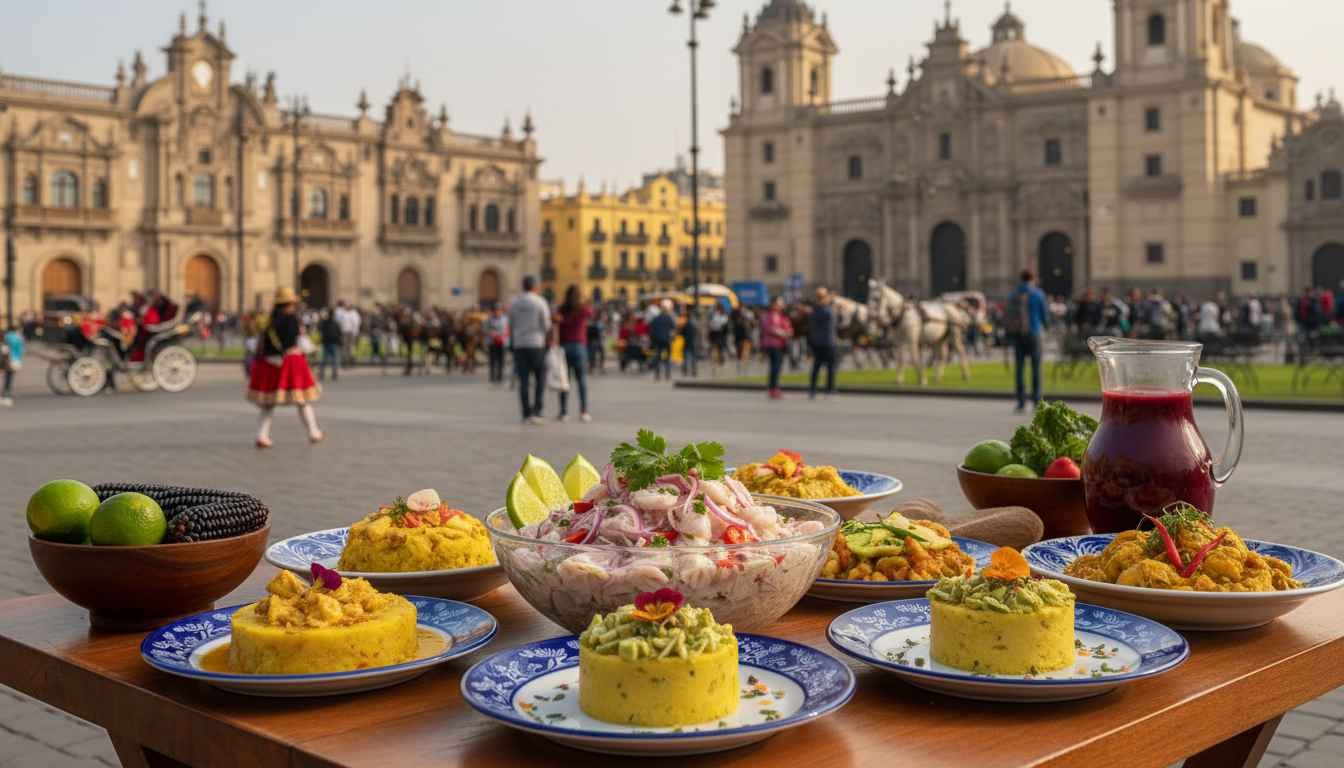
Lima’s Historic Centre is a UNESCO World Heritage site, and Plaza Mayor is where to start. The square is ringed by the Government Palace, the Cathedral of Lima, and the Archbishop’s Palace — all of them worth more than a passing look. The cathedral holds the tomb of Francisco Pizarro and a museum of religious art, while the Government Palace changes guard in a ceremony at noon.
Two blocks away, the Convento de San Francisco is Lima’s most atmospheric stop. Its yellow-and-white facade hides a library of ancient texts and catacombs that hold the remains of tens of thousands of people — a sober, fascinating look at colonial Lima. Give the centre a full morning, and go on foot: the streets between the plaza and the San Francisco church are pedestrian-friendly and lined with balconied colonial buildings.
Miraflores and the Malecón: Lima’s Seaside Face
Miraflores is where most visitors stay, and for good reason. The Malecón — the clifftop promenade — runs for kilometres above the Pacific, with parks, sculptures, and paragliders launching from the cliff edge. Parque del Amor, with its mosaic walls and kissing statue, is the classic photo stop at sunset. Below the cliffs, the beaches are better for surfing than swimming: the water is cold and the waves are serious, which is why Lima has a real surf culture.
Larcomar, the open-air shopping centre built into the cliff, is worth a visit for the ocean views alone. Around it, the streets of Miraflores hold Lima’s densest concentration of restaurants, cafés, and bars — the practical base for exploring the city’s food scene.
Barranco: Art, Colour, and the Bridge of Sighs
Barranco is Lima’s bohemian district, and the easiest way to feel the city’s creative side. The Puente de los Suspiros — the Bridge of Sighs — is a small wooden bridge wrapped in a local legend: cross it holding your breath and your wish comes true. The streets around it are lined with colonial mansions turned into galleries, cafés, and boutique hotels. On weekends, the main square fills with artists selling work and musicians playing in the open air. Come in the late afternoon, when the light turns the painted facades gold.
Huaca Pucllana: A Pyramid in the Middle of the City
Huaca Pucllana is one of the strangest and best sights in Lima: a massive adobe pyramid built by the Lima culture around 500 AD, standing in the middle of the modern Miraflores district, surrounded by apartment blocks. Guided tours run through the day and explain the site’s ceremonial and administrative role. It is a powerful reminder that Lima’s history goes back more than a thousand years before the Spanish arrived — and the site’s restaurant, with its terrace overlooking the floodlit ruins, is one of the most memorable dinner settings in the city.
Lima’s Food Scene: The Gastronomic Capital of Latin America
Lima is often called the gastronomic capital of Latin America, and the claim holds up. Start with ceviche — raw fish cured in lime juice with red onion and ají — at a lunchtime cevichería in Miraflores or Surquillo. Then work through the city’s other classics: lomo saltado (stir-fried beef with fries and rice), causa (layered potato and avocado), and anticuchos (grilled beef heart skewers) from a street vendor.
For a deeper dive, visit a local market such as Mercado de Surquillo, where vendors sell exotic fruits from the Amazon and the Andes, fresh fish, and Andean cheeses. Book a table at one of the city’s fine-dining restaurants well ahead if you want the full tasting-menu experience — Lima’s best-known kitchens are booked weeks out. For a wider Latin American journey, our guide to the top places to visit in Central and South America puts Lima in regional context.
Parque de las Leyendas and Lima’s Green Spaces
Parque de las Leyendas is part zoo, part botanical garden, and part archaeological site — built around the ancient Maranga complex, it combines Peruvian wildlife, gardens, and pre-Inca ruins in one large park. It is a good half-day for families, with a genuine educational angle on Peru’s biodiversity and ancient history. Closer to the centre, Parque de la Reserva hosts the Circuito Mágico del Agua, a nightly fountain show with music and lights that is surprisingly popular with locals as well as visitors.
Planning Your Lima Visit
Lima’s best weather runs from December to April, when the coastal fog lifts and the sun comes out. From June to September, the city sits under a grey marine layer known as the garúa — cooler, overcast, and humid, though still perfectly good for sightseeing and eating. Most visitors spend two to three days in Lima: one for the Historic Centre, one for Miraflores and Barranco, and a half-day for Huaca Pucllana and the markets. If you are continuing to the coast, our guide to places to visit in San Pedro, Belize covers another Latin American seaside escape.
Getting around is straightforward: taxis and ride-hailing apps are cheap and widely used, and Miraflores, Barranco, and San Isidro are walkable. Keep valuables out of sight in crowded areas, as in any large city, and use registered taxis or apps at night.
FAQ
How many days do you need in Lima?
Two to three days cover the Historic Centre, Miraflores, Barranco, Huaca Pucllana, and the food scene. Add a day if you want a slower pace or a day trip to the port of Callao.
What is the best time to visit Lima?
December to April brings the sunniest weather. June to September is cooler and overcast, but the city is still very visitable and less crowded.
Is Lima suitable for families?
Yes. Parque de las Leyendas, the fountain show at Parque de la Reserva, and the Malecón’s parks and playgrounds all work well with children.
Final Thoughts
Lima rewards the traveler who slows down. The pyramids and plazas tell the history, the Malecón gives you the ocean, and the food — from a market stall ceviche to a white-tablecloth tasting menu — tells you everything about what Peru is. Give the city its own days on your itinerary, not just a layover, and it will give you one of the richest stops in South America.