
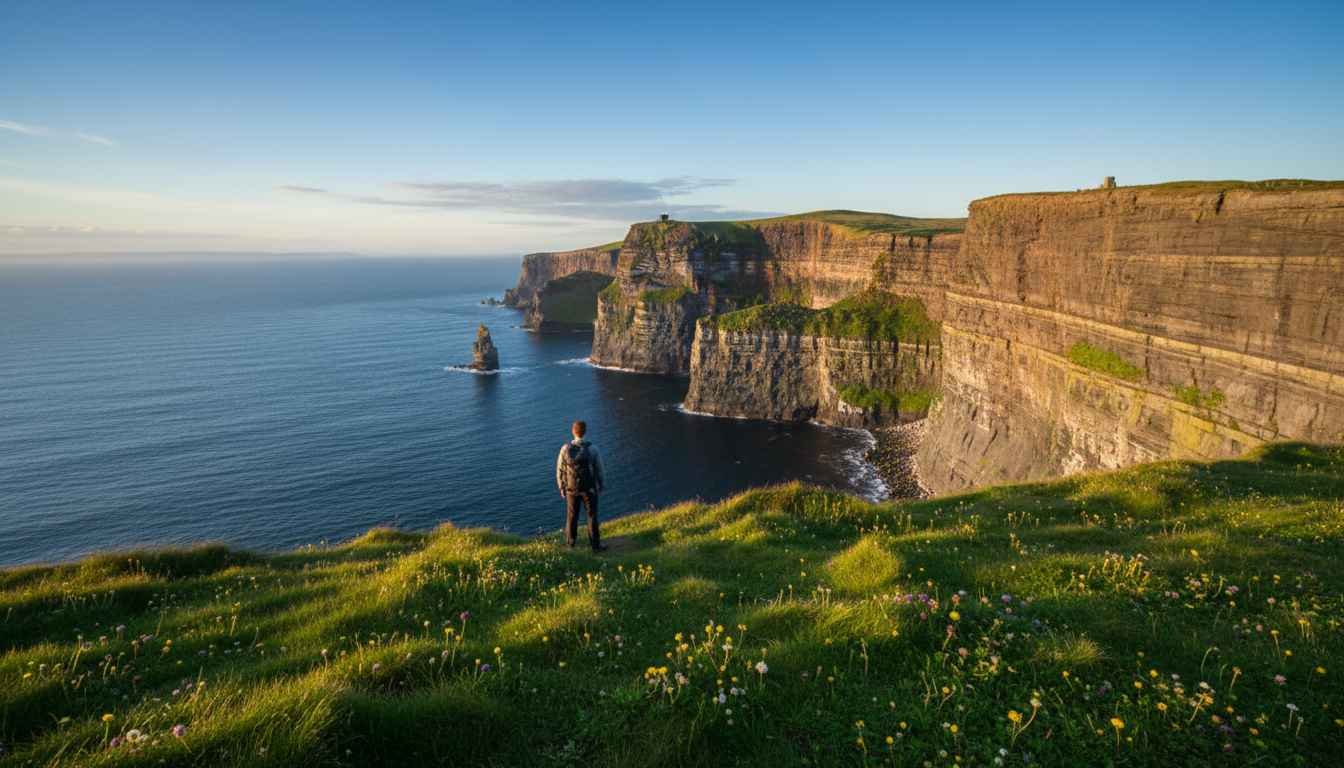
Imagine standing on a cliff edge on Ireland’s west coast, Atlantic wind in your face, with the ocean stretching to the horizon and a stone wall winding inland behind you. That feeling is why so many travellers ask what is the best place to visit in Ireland — and why the honest answer is that it depends on what you want from the trip. Dublin suits a first city break, the west coast suits scenery and walking, and the north suits dramatic geology. This guide gives you a clear top pick for each kind of trip, so you can choose with confidence.
The Short Answer: Start with Dublin, Then Head West
If you have only one trip and want the best all-round introduction, combine Dublin with the west coast. Dublin, the capital, is compact, walkable and packed with history, literature and music, and it is the easiest arrival point for most visitors. From there, Galway and the Cliffs of Moher, a few hours west, deliver the coastal scenery that most visitors picture when they think of Ireland. Together they cover the two sides of the country: the city and the wild edge.
Dublin: History, Literature and City Life
Dublin rewards two or three unhurried days. Trinity College, founded in 1592, is home to the Book of Kells, an illuminated manuscript that draws visitors from around the world, and its Old Library is one of the city’s most beautiful rooms. Nearby, Dublin Castle and St. Patrick’s Cathedral trace the city’s medieval and later history, while the Temple Bar district, the Georgian squares and the museums along the Liffey give the city its character. Dublin’s literary heritage runs deep — the city is associated with writers including James Joyce, Oscar Wilde and Samuel Beckett — and its pubs, with live traditional music on many evenings, are as much a part of the experience as the sights.
Galway and the West: The Cliffs of Moher and Connemara
Galway, on the west coast, is a smaller, livelier base than Dublin, with colourful medieval streets, a busy arts scene and a harbour atmosphere. It is the natural gateway to the Cliffs of Moher, the towering sea cliffs in County Clare that rise to over 200 metres above the Atlantic and are among Ireland’s most visited natural sights. Walk the cliff path in good weather, but respect the barriers and the wind: the cliffs are exposed and safety fencing exists for a reason. Inland, Connemara offers a wilder landscape of mountains, lakes and bogland, best explored by car with stops in small villages, while the Aran Islands, reached by ferry from the coast, offer a slower, more traditional island experience.
The South-West: The Ring of Kerry and Killarney
Further south, the Ring of Kerry is Ireland’s most famous driving route, a loop around the Iveragh Peninsula through coastal villages, mountain passes and views of the Atlantic. Killarney National Park, at the route’s eastern end, is a gentler counterpoint, with lakes, woodland and the 15th-century Ross Castle, and its walking and cycling trails suit visitors who prefer to explore on foot. The south-west also includes Cork, Ireland’s second city, with its English Market food hall and a more relaxed urban pace than Dublin, and the harbour town of Kinsale, known for its restaurants and colourful streets.
The North: Giant’s Causeway and the Causeway Coast
Northern Ireland, part of the United Kingdom, holds some of the island’s most dramatic scenery. The Giant’s Causeway, a UNESCO World Heritage site in County Antrim, is a formation of tens of thousands of interlocking basalt columns stepping into the sea, formed by ancient volcanic activity. The Causeway Coastal Route, which runs along the Antrim coast, links it with the Carrick-a-Rede rope bridge, the town of Bushmills and the walled city of Derry-Londonderry. Note the practical difference for visitors: Northern Ireland uses pounds sterling, while the Republic of Ireland uses the euro, so carry the right currency if your trip crosses the border.
Planning Your Trip: When to Go and How to Travel
Late spring and early autumn generally offer the best balance for Ireland: longer days, milder weather and fewer crowds than the summer peak. Summer brings the warmest weather and the fullest festival calendar, but also the busiest sights. Winter is quieter and cheaper, though days are short and some rural attractions have reduced hours. A car gives you the most freedom outside the cities, especially in the west and south-west, but driving is on the left and rural roads are narrow, so allow more time than the map suggests. Trains and buses connect the main cities well. For more honeymoon and couples travel ideas, see our guide to the places to visit in Maldives for honeymoon, and for another island-coast trip closer to home, see the best places to visit in Shimla and Manali.
FAQ: Frequently Asked Questions About the Best Place to Visit in Ireland
- What is the best place to visit in Ireland for a first trip?
Dublin combined with Galway and the Cliffs of Moher: the city for history and culture, the west coast for the scenery Ireland is famous for.
- How many days do you need in Ireland?
Five days cover Dublin and the west coast; ten days let you add the Ring of Kerry and the Causeway Coast without rushing.
- Is Ireland suitable for families?
Yes — Dublin’s museums and parks, the beaches and castles of the west, and the national parks all suit children, with castles and farm visits as firm favourites.
Final Thoughts
There is no single best place in Ireland, and that is the point: Dublin for the city, Galway and the Cliffs of Moher for the coast, Kerry for the drive, and the Causeway Coast for geology. Pick the combination that matches your pace, pack for rain whatever the season, and Ireland will give you the trip you pictured when you first asked the question.